Home F & B F&B Linen Maintenance: Keeping Your Dining Area Spotless and Stylish

F&B Linen Maintenance: Keeping Your Dining Area Spotless and Stylish
F&B Linen Maintenance

In the hospitality and food industry, presentation is everything. Long before guests ever taste the food, they experience the ambiance — the table arrangement, the cleanliness, the colors and textures, all around the guest. And at the very center of that experience is a critical yet often under-appreciated element: F&B linen.

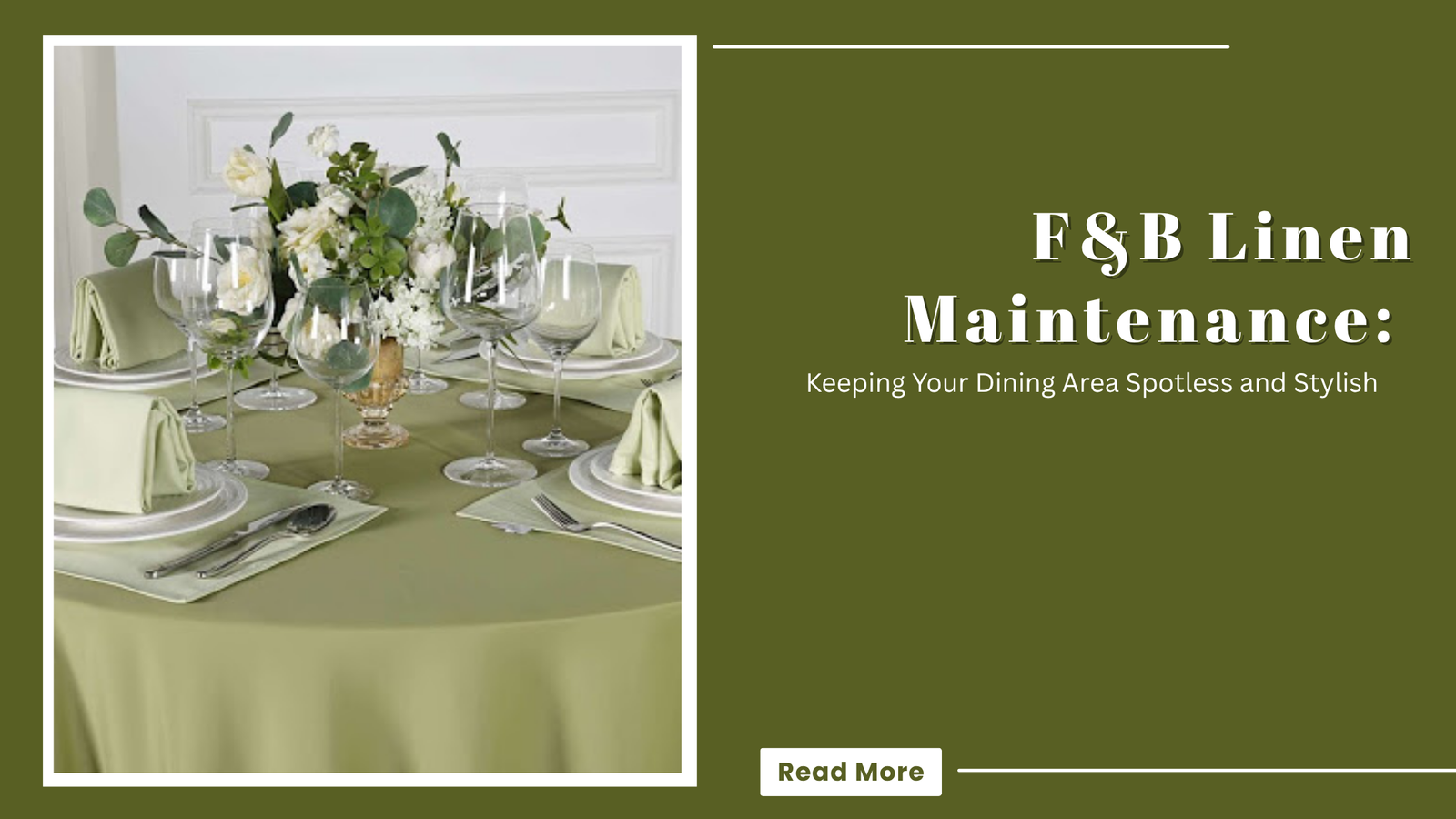
From tablecloths, napkins, runners, and placemats, F&B linen is a critical part of the dining experience. If the linen is well-maintained, it presents your restaurant or café to be polished, hygienic, and inviting. If the linen isn’t well-maintained, it will tarnish your brand no matter how great the food is. 

This guide will provide you with everything you need to know about maintaining F&B linen including: best practices, common pitfalls, long-life tips, and how looking after your linen maintains a clean, stylish dining space.

Why F&B Linen Maintenance Matters

1.1 Enhances Guest Experience

Clean, crisp, and well-presented table linen enhances the aesthetics of your dining space in a heartbeat. Guests will notice clean linen, and will remember it. 

1.2 Reflects Hygiene Standards

In the F&B industry, hygiene is not negotiable. Dirty or stained linen appears unsanitary for guests, regardless of how clean and pristine your kitchen is. 

1.3 Extends the Life of Your Linen

Quality linen costs money, which means it’s an investment. Proper linen care protects linen in good condition, extends the life, incurs less wear and tear, and affords repeat purchasing. 

1.4 Strengthens Brand Identity

Your linen communicates who your brand is, what it stands for, and how it differs from competitors – lavish, contemporary, classic or simple. Proper care reinforces how you wish to be identified. 

Types of F&B Linen and Their Care Requirements

2.1 Tablecloths

These will cover the entire dining surface, receiving the most spills, heat, food stains, and friction. 

Care Tips:

  • Stains should be pre-treated before washing
  • Carefully wash in warm water with mild detergent
  • Press and fold neatly for a professional presentation

2.2 Table Napkins

Typically stained with wine, or sauces, oils, and/or make-up. 

Care Tips:

  • Pre-soak in cold water
  • Use an oxygen based stain-remover
  • Wash separately to help prevent dye transfer

2.3 Placemats & Table Runners

They add aesthetic value, but trap a ton of dust and crumbs. 

Care Tips:

  • Shake and/or dust off prior to washing
  • Use gentle or delicate wash cycles
  • Air-dry to maintain original shape

2.4 Buffet Linen / Skirting

Heavily used during events and banquets. 

Care Tips:

  • If applicable, check for a torn pleat
  • Never wring too much
  • Store them hanging into prevent creasing

The Essential Step-by-Step Guide to F&B Linen Maintenance

1: Pre-Sorting the Linen

Passenger linen into groups of:

  • Whites
  • Pastels
  • Dark colors
  • Heavily stained items

Sorting will prevent anything from becoming discolored during washing and improve the overall washing process.

2: Pre-Treatment of Stains

Depending on your restaurant, the obvious stains to normally deal with are:

  • Red wine
  • Curry
  • Tomato gravy
  • Oil & butter
  • Coffee & tea

Use:

  • Cold water rinse
  • Enzyme-based stain removers
  • Soaking for 30–45 minutes

Bleach should not be used too routinely, as it can weaken the fibers, and more often than not, cause yellowing.

3: Choosing the Right Wash Cycle

  • If possible wash in Warm water (40-60 C)
  • Mild detergent
  • Do not overfill machine
  • Going slower is better for more delicate linen

4: Proper Drying Techniques

  • Air drying is better for preserving overall texture
  • Tumble dry only on low heat
  • Remove from dryer ASAP to avoid wrinkles

5: Ironing and Pressing

Finishing is what gives linen its crisp and elegant look

  • Steam iron
  • While slightly damp is best for result
  • Fold immediately and stack flat

Step 6: Correct Storage

Store incorrectly if you want to attract dust, odors, and creasing.

  • Store on Dry Shelving
  • Store in Breathable Linen Bags
  • Write the sizes and types of your linens to avoid confusion.

Common Linen Maintenance Mistakes Restaurants Must Avoid

  • Using Too Many Chemicals: Excessive amounts of bleach, detergent, and hot water reduce the quality of your linens and cause them to fray prematurely.
  • Letting Stains Sit Too Long: Stains that are removable become permanent.
  • Overstuffing Washing Machines: Linens need room to wash properly. Overstuffing reduces effectiveness and causes damage.
  • Drying Too Hot: Drying linens at high temperatures shrinks the fabric, causing wrinkles and discoloration over time.
  • Not Replacing Damaged Linens: Torn, stained, and worn linens portray a poor quality to customers. Replacing your linen is important.

Professional Tips to Extend the Life of F&B Linen

1. Purchase Good Quality Linens: Quality linens made from good quality cotton or blended fabric will have fewer issues with wear and tear and be easier to maintain.

2. Rotate Your Linens: Using a rotation system helps ensure all linens wear at a more even rate.

3. Train Staff in Linen Care: 

Your staff should know:

Use Fabric Softeners Sparingly

Too much softener leaves residue and attracts more stains.

Conduct Regular Linen Audits

To keep your linens looking their best, you should check everyone for the following:

  • Stains
  • Holes
  • Edge frays
  • Color fading

Maintaining records helps with timely replacements.

How Clean Linen Enhances Your Restaurant or Cafe Ambience

  1. A Distinct Look: Clearly kept linens enhance the visual appeal and consistency of your dining setup.
  2. Increased Comfort: Soft linens that smell fresh further enhance the guest’s sensory experience.
  3. Brand Reputation: Guests correlate pristine linens to cleanliness, professionalism and premium service.
  4. Guest Loyalty: Guests are more likely to return and tell others about your restaurant, if they feel you are taking care of them by your attention to small details like properly set tables.

Choosing the Right F&B Linen Manufacturer

A reputable F&B linen supplier will make it easier for hotels and restaurants to maintain quality standards. 

When selecting a supplier or manufacturer, ask about:

  • Fabric Quality & GSM Choices: The higher the GSM the thicker and thus more durable the linen will be.
  • Customization: Your linen should coordinate with your brand theme, color palette and style of table setting.
  • Consistency of Product: If you have constant availability of the product you carry less down time.
  • Maintenance Friendly: Easy to maintain fabrics, meaning wrinkle-free and stain resistant.
  • Experience in Hospitality Linen: The manufacturers that specialize in linen products provide a better understanding of the industry standard.

The Future of F&B Linen: Trends to Watch

  1. Stain Resistant Linen: New treatments to fabrics reduce the visibility of stains on linens. 
  2. Eco-Friendly Linen: Organic cotton and sustainable blends are on the rise. 
  3. Custom Branding: Restaurants are stitching the logo for a small embroidered logo onto napkins and/or tablecloths.
  4. Coordinated Colors Themes: There are also linens used by hotels and restaurants in seasonal or themed sets.

Conclusion

F&B linen is much more than just a functional piece of fabric, it is a powerful branding mechanism to enhance your hospitality experience.  When properly maintained, you keep the dining area clean, professional and stylish.  Having clean crisp linen tells your guests that you care, that hygiene is important, and that you are considerate of every detail that adds to their comfort.

With the proper maintenance methods and high-quality product sourced from a trusted source or F&B linen manufacturer, you can extend the life of your investment and improve the overall dining experience and make every meal memorable.

FAQs

Pre-treat the stain with cold water and a mild enzyme based food stain remover, and then wash.  Do not use hot water as it sets the stain.

If properly cared for, quality linen should last 12-18 months.  Items should be changed sooner if they are visibly damaged or discolored.

 Yes.  Wash whites from colors to prevent color transfer or fading, and to maintain whiteness.

Yes. Ironing gives a crisp, clean, professional look that elevates table presentation.

Cotton, cotton-rich blends, and stain-resistant polyester blends are ideal due to durability, softness, and easy care.

Related Post

Leave a Reply

Your email address will not be published. Required fields are marked *